Myopia Management
Protecting Your Child’s Vision at Shannon Vision Care.
What Is Myopia?
Myopia, also known as nearsightedness, causes blurry distance vision. It occurs when the eyeball grows too long from front to back. Because children’s eyes continue to grow, myopia often progresses over time, especially during the school-age years.
Both genetics and lifestyle factors—such as increased screen time, near work, and limited outdoor activity—can influence how quickly myopia worsens.
Why Managing Myopia Matters
Worsening myopia can pose serious risks to both eye health and quality of life. Higher levels of myopia are associated with an increased risk of vision-threatening conditions, including:
- Glaucoma
- Cataracts
- Retinal detachment
- Myopic maculopathy
Progressive myopia can also affect a child’s confidence and daily activities, especially if they rely on thick glasses or struggle with sports and school performance.
Our Myopia Management Programs:
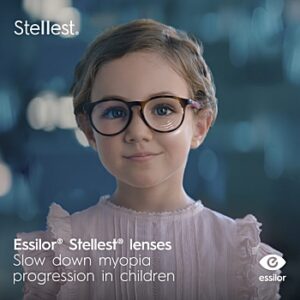 Stellest Glasses (FDA-authorized)
Designed for children who prefer to wear glasses for myopia management. Stellest lenses are the first and only FDA-authorized spectacle lenses proven to slow myopia progression in children.
Clinical studies in children ages 6–12 showed:
- 71% average reduction in myopia progression
- 53% less eye lengthening over a two-year period
 MiSight Contact Lenses (FDA-approved)
Designed for children who prefer contact lenses, MiSight lenses are daily disposable soft contact lenses worn during the day.
Clinical studies in children ages 8–12 showed:
- 59% average reduction in myopia progression
- 52% less eye lengthening over a three-year period
Ortho-Keratology (Off-label Use)
Orthokeratology has been shown to be a safe and effective option for slowing myopia progression, though it is not FDA-approved specifically for this purpose.
Ortho-K lenses are rigid contact lenses worn overnight to gently reshape the cornea. This allows clear daytime vision without glasses or contact lenses, making it an excellent option for active children or those who prefer not to wear lenses during the day.
Low-Dose Atropine Drops (Off-label)
Low-dose atropine drops have demonstrated effectiveness in slowing myopia progression, but they are not FDA-approved for this indication.
Compared to other available treatments, atropine may have:
- Lower overall efficacy
- Increased side effects at higher doses
For this reason, atropine is typically reserved as an adjunct therapy or for special circumstances when other treatment options are not appropriate.
Learn More About Myopia Management
If you’re concerned about your child’s nearsightedness or prescription changes, we’re here to help.
Please contact our office at 972-747-1122 for questions or to schedule a Myopia Management consultation with Dr. Ashley Shannon.